There’s nothing quite like the tangy, spicy punch of homemade napa-cabbage kimchi – trust me, once you taste the real deal, you’ll never go back to store-bought! This fermented Korean staple isn’t just delicious; it’s packed with gut-loving probiotics that’ll make your tummy happy. My love affair with kimchi started years ago when my Korean neighbor Mrs. Lee handed me her family’s recipe scribbled on a stained notecard. “Fermentation is magic,” she whispered as she showed me how to massage the spicy paste between cabbage leaves. That first bubbly, pungent batch changed everything – the way it transformed from crisp cabbage to complex, funky goodness still amazes me. Now my fridge always has a jar of homemade napa-cabbage kimchi fermenting away, filling my kitchen with that unmistakable spicy-sour aroma that says “good bacteria at work!”
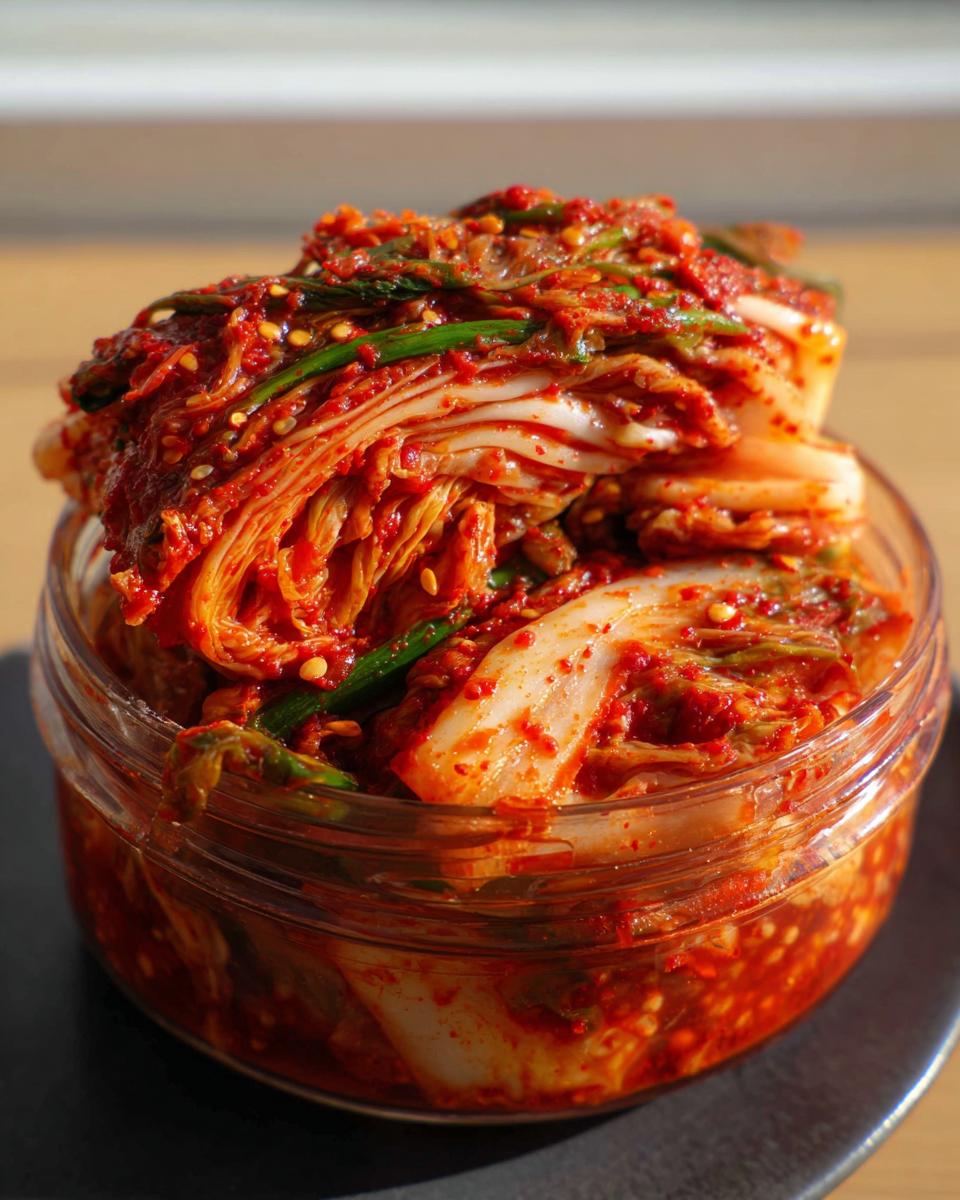
Why You’ll Love This Homemade Napa-Cabbage Kimchi
Oh, where do I even start? This homemade kimchi isn’t just food—it’s a flavor explosion that does your gut a favor while it dances on your taste buds. Here’s why you’ll be obsessed:
- Happy belly magic: Packed with probiotics that keep your digestion singing (goodbye, store-bought pills!)
- Spice it your way: Love heat? Pile on that gochugaru. Mild more your speed? Just ease up—it’s your kimchi kingdom!
- That authentic zing: No weird preservatives—just the real, complex funk that builds day by day in your own kitchen
- Crisp-to-squish perfection: Starts crunchy, then melts into tangy softness as it ferments (I sneak bites at every stage)
Plus—confession time—I get a little thrill every time I hear the jar burp. That’s the sound of deliciousness growing!
Ingredients for Homemade Napa-Cabbage Kimchi
Gather these goodies before diving in—trust me, you’ll want everything prepped and ready when the cabbage’s done brining (it gets messy fast!). Here’s what makes magic happen:
- 1 large napa cabbage (about 2 lbs): Look for tightly packed leaves with crisp white stems—avoid any with brown spots
- 1/4 cup coarse sea salt: The big crystals dissolve slowly for perfect brining (table salt makes it too salty!)
- 1 cup water: Just plain filtered or boiled-and-cooled—chlorine can mess with fermentation
- 1 tbsp grated ginger: Fresh is best—I keep a nub in the freezer for easy grating
- 3 cloves minced garlic: Smash ’em first to release their punchy oils
- 1 tbsp sugar: Feeds the good bacteria—white or brown both work
- 3 tbsp Korean red pepper flakes (gochugaru): The MVP—see notes below for subs
- 1/4 cup fish sauce: That deep umami kick (but we’ve got vegan options!)
- 4 green onions, chopped: Scissors make quick work of these
- 1 small daikon radish, julienned: Adds crunch—carrot works in a pinch
Ingredient Notes & Substitutions
Gochugaru alert! Those vibrant Korean pepper flakes are non-negotiable for real-deal kimchi—they’ve got fruity heat without burning your face off. Find them at Asian markets or online (I stockpile bags!). In emergencies? Mix 1 tbsp paprika + 2 tsp cayenne, but it won’t taste quite right.
Fish sauce haters? Swap with 2 tbsp soy sauce + 2 tbsp water for vegan kimchi (add 1 tsp mushroom powder if you’re fancy). And if daikon’s MIA, carrots or even jicama bring that satisfying crunch.
Equipment Needed for Homemade Napa-Cabbage Kimchi
Listen—you could make kimchi with whatever’s in your kitchen, but these tools? They’ll save you from the sticky, spicy mess I made my first time (RIP favorite white shirt!). Here’s your kimchi survival kit:
- Huge mixing bowl: Big enough to wrestle a whole cabbage—I use my biggest stainless steel one
- Rubber gloves: Unless you want neon-orange hands for days (been there!)
- Clean 1-quart jar: Wide-mouth makes packing easier—mason jars work great
- Pound-er thing: Your fist works, but I love my potato masher for squishing out air bubbles
- Kitchen scale: Optional, but helps measure cabbage portions evenly
That’s it! No fancy gadgets—just stuff you probably already own (except maybe the gloves… seriously, get the gloves).
How to Make Homemade Napa-Cabbage Kimchi
Alright, let’s get messy—this is where the magic happens! I’ve made enough kimchi disasters to know exactly where beginners go wrong (hello, over-salted cabbage of 2018). Follow these steps for tangy-spicy success:
- Prep the cabbage: Cut your napa cabbage lengthwise into quarters—leave the core intact so leaves stay connected. Dunk each quarter in the saltwater bath (1/4 cup salt dissolved in 1 cup water) and let soak 2 hours, flipping every 30 minutes. Test a thick stem—it should bend without snapping.
- Rinse & drain: This part’s crucial! Rinse each quarter under cold water 2-3 times to remove excess salt—taste a leaf edge; it should be faintly salty but not make you pucker. Shake off water and let drain in a colander while you…
- Make the paste: Put on those gloves! Mix ginger, garlic, sugar, gochugaru, and fish sauce into a fiery red paste. Fold in green onions and daikon—it’ll look alarmingly chunky but trust me, this texture clings to cabbage perfectly.
- The fun part: Spread paste between every single leaf, starting from the inner layers. I use my hands (gloved!) to really massage it in—think “cabbage spa treatment.” Don’t be shy!
- Pack it tight: Fold each quarter into a neat bundle and cram into your jar—press down hard after each addition to eliminate air pockets. Leave 2 inches headspace—kimchi expands like a sleepy dragon waking up!
- Ferment: Loosely cover (I use the jar lid just resting on top) and stash at room temp away from sunlight. Check daily—within 24-48 hours, you’ll see happy bubbles and smell that funky-good aroma.
Spice warning! That gochugaru stains everything—wipe spills immediately unless you want pink countertops. And whatever you do, don’t rub your eyes mid-process (learned that the hard way).
Fermentation Tips for Perfect Homemade Napa-Cabbage Kimchi
Fermentation isn’t an exact science—it’s more like babysitting a tiny flavor monster! Here’s how to keep yours happy:
- Burp it: Open the jar briefly each day to release built-up gases (that satisfying “pffft” sound means it’s working!)
- Taste test: After day 2, steal a bite daily—it’s done when it’s tangy enough for you (I like mine at day 3)
- Bubbles are good: Foamy liquid means active fermentation—just push floating bits back under brine with clean utensils
Remember: cooler rooms slow fermentation—if your kitchen’s chilly, give it an extra day. Trust your nose; if it smells rotten (not funky), toss it and start fresh.
Serving Suggestions for Homemade Napa-Cabbage Kimchi
Oh honey, once that kimchi’s ready, you’ll want to put it on everything—I sure do! My favorite midnight snack? Warm rice with a big spoonful of kimchi on top (the heat slightly wilts it… heaven!). But that’s just scratching the surface:
- Kimchi grilled cheese: Sounds weird, tastes AMAZING—the tang cuts through all that gooey cheddar
- Breakfast buddy: Toss it in scrambled eggs or on avocado toast—wakes your taste buds right up!
- Soul-warming soups: Drop a spoonful in ramen or tofu stew—it melts into the broth adding depth
Pro tip: Save that bright red kimchi juice—it makes killer marinades or bloody mary mixers!
Storing and Reheating Homemade Napa-Cabbage Kimchi
Here’s the beautiful thing about kimchi—it basically takes care of itself! Once fermentation hits your preferred tanginess (mine’s usually around day 3), screw the lid on tight and shove it in the fridge. The cold slows everything down but doesn’t stop it—your kimchi keeps developing deeper flavor for months. I’ve happily eaten jars that sat for 3 months (if they last that long!).
Important rule: Never heat kimchi directly unless you’re cooking with it—those precious probiotics die around 115°F. Want warm kimchi? Let it sit at room temp for 15 minutes or float the jar in warm water. My grandma would gasp if she saw someone microwaving it!
Homemade Napa-Cabbage Kimchi FAQs
Got kimchi questions? I’ve got answers—after making dozens of batches (and a few hilarious fails), here’s what folks ask most:
Is kimchi vegan?
Traditional no (thanks to fish sauce), but my vegan friends swear by the soy sauce + mushroom powder swap listed earlier—tastes just as punchy! The fermentation magic works the same.
How do I know if it’s spoiled?
Trust your nose: good kimchi smells tangy and funky like pickles; bad kimchi reeks like rotten eggs. If you see mold (rare with proper salt levels), toss it—but white foam or bubbles are totally normal!
Why isn’t mine bubbling?
Don’t panic! Cool kitchens slow fermentation—give it another day. Still nothing? Your cabbage might’ve been over-rinsed (salt helps the process). Next time, taste-test the brine step!
Can I use regular cabbage?
Sure, but napa’s tender leaves absorb flavors better—green cabbage makes crunchier, milder kimchi. If you try it, brine longer (3+ hours) since those leaves are tougher.
Nutritional Information for Homemade Napa-Cabbage Kimchi
Here’s the scoop: my homemade napa-cabbage kimchi is basically guilt-free flavor fireworks! A 1/4 cup serving has about 15 calories, 1g fiber, and zero fat—but let’s be real, you’ll eat way more than that. Exact numbers vary based on your cabbage size and how heavy-handed you get with the fish sauce. The probiotics? Priceless (and impossible to calorie-count!). Just know it’s packed with good-for-you stuff that makes your gut do a happy dance.
Share Your Homemade Napa-Cabbage Kimchi Experience
Did your kimchi turn out tangy and wonderful? Or maybe hilariously disastrous? Either way, I want to hear about it! Tag me on Instagram @kimchilover with your bubbly creations—I’ll cheer on your fermentation adventures and maybe steal your serving ideas!
Print
5-Star Homemade Napa-Cabbage Kimchi That’s Gut-Friendly & Addictive
- Total Time: 3 hours (plus fermentation)
- Yield: 1 quart 1x
- Diet: Low Fat
Description
Homemade napa-cabbage kimchi is a traditional Korean fermented dish made with napa cabbage, seasonings, and spices. It’s spicy, tangy, and packed with probiotics.
Ingredients
- 1 large napa cabbage (about 2 lbs)
- 1/4 cup coarse sea salt
- 1 cup water
- 1 tbsp grated ginger
- 3 cloves minced garlic
- 1 tbsp sugar
- 3 tbsp Korean red pepper flakes (gochugaru)
- 1/4 cup fish sauce
- 4 green onions, chopped
- 1 small daikon radish, julienned
Instructions
- Cut the napa cabbage into quarters lengthwise.
- Dissolve salt in water and soak the cabbage for 2 hours, turning every 30 minutes.
- Rinse the cabbage thoroughly under cold water and drain.
- Mix ginger, garlic, sugar, gochugaru, fish sauce, green onions, and radish in a bowl.
- Spread the paste between each cabbage leaf.
- Pack the kimchi tightly into a clean jar, pressing down to remove air bubbles.
- Leave 1-2 inches of headspace and seal the jar loosely.
- Ferment at room temperature for 1-5 days, burping the jar daily.
- Store in the refrigerator for up to 3 months.
Notes
- Use gloves when handling gochugaru to prevent skin irritation.
- Fermentation time depends on your taste preference – shorter for mild, longer for tangy.
- Bubbles during fermentation are normal.
- Kimchi will continue to develop flavor in the fridge.
- Prep Time: 3 hours
- Cook Time: 0 minutes
- Category: Side dish
- Method: Fermentation
- Cuisine: Korean
Nutrition
- Serving Size: 1/4 cup
- Calories: 15
- Sugar: 1g
- Sodium: 320mg
- Fat: 0g
- Saturated Fat: 0g
- Unsaturated Fat: 0g
- Trans Fat: 0g
- Carbohydrates: 3g
- Fiber: 1g
- Protein: 1g
- Cholesterol: 0mg
Keywords: kimchi, napa cabbage, fermented, Korean, spicy, probiotic